
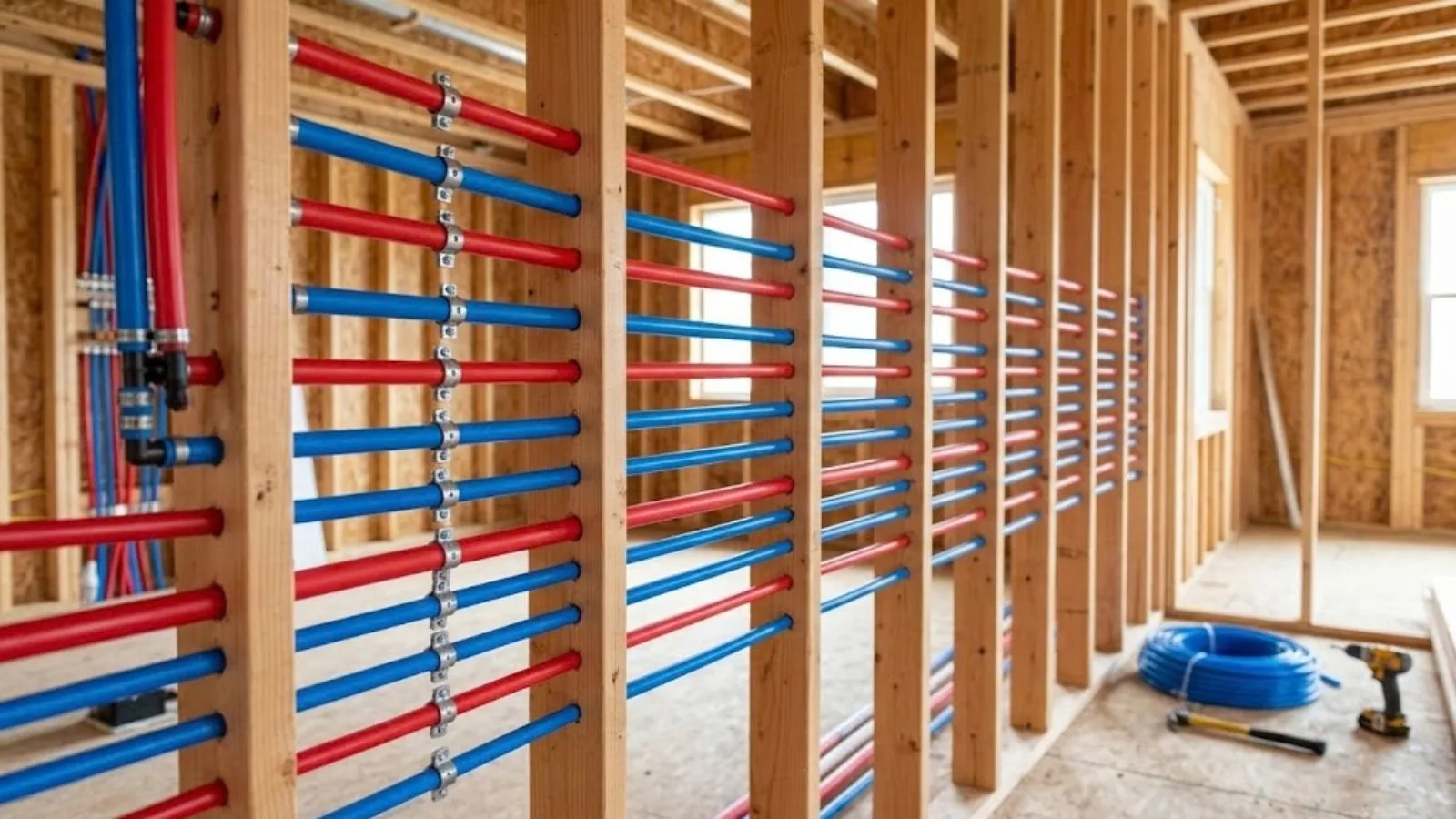
Shower pipe materials and where each is used
Supply pipes carry pressurized water. Drain pipes carry waste by gravity. They are different systems and use different materials.
| Pipe | Used for | Good to know |
|---|---|---|
| Copper | Hot and cold supply | Long lasting, joined with solder, and common in older walls |
| PEX | Hot and cold supply | Flexible plastic tubing that bends around studs with fewer joints |
| CPVC | Hot and cold supply | Rigid plastic rated for hot water, glued at each joint |
| ABS or PVC | Drain and trap | Light plastic, usually 2 inch at a shower drain |
| Cast iron | Older drain lines | Heavy and quiet, sometimes corroded inside in older houses |
The valve is the part that wears out first
A shower valve mixes hot and cold water and sends it to the showerhead. Most modern valves are pressure balance or thermostatic, which means a flush elsewhere in the house does not swing the temperature much. Inside is a cartridge that does the mixing, and that cartridge is what usually fails.
Supply pipes join the valve body through threaded or soldered fittings. The valve is mounted to blocking so it does not move when the handle turns. If the valve is loose, the pipes behind it can flex and eventually leak at a joint.
A dripping showerhead or a handle that no longer holds temperature points to the cartridge or stops. That repair is close to faucet repair in scope, and a plumber can often finish it without opening the wall if the trim has been installed with access in mind.
Shower valves, drains and pans are installed to the California Plumbing Code, built on the Uniform Plumbing Code (UPC), and a remodel that moves them may need a permit.
Shower leaking or being rebuilt?
Call the 24/7 line and tell the dispatcher what you see. We book a plumber and give a clear price before work starts.
The shower pan drain is where leaks hide
A shower floor has a waterproof pan under the tile, and the drain passes through it. The pan is usually a liner or membrane that slopes toward a drain of about 2 inches. Water that gets past the grout still has to go somewhere, and it travels along the liner to weep holes at the drain. If the liner is cut or the drain clamp is loose, water leaks into the subfloor.
Leak signs that deserve a call
A slow leak in a shower wall or pan can run for months before it becomes visible. These are the signs to act on.
A stain on the ceiling below
A brown ring under an upstairs shower often means water is passing through the floor.
Loose or cracked tile
Moisture behind tile softens the setting bed and lets pieces shift.
A musty smell with no visible mold
Damp framing holds odor even when the surface looks clean.
A water bill that jumps with no change in use
A leak on the pressurized side adds to the meter reading around the clock.
Soft or spongy floor near the shower
Subfloor that stays wet loses stiffness and may feel bouncy.
Water at the base of the wall after use
A leak at the valve, pan edge or drain can show up at the baseboard.
If you see any of these, stop using the shower and call. A plumber can pressure test the supply and look for the source with leak detection before anyone cuts into tile.
Goleta water and permit notes for shower work
Goleta Water District's 2025 water quality report gives 21 grains per gallon as the customer average hardness. Scale from hard water collects inside valve cartridges and showerheads, so a valve that comes apart without opening the wall is worth the extra cost.
The district also has a 24 hour rule for fixing leaks, and it stayed in effect after the 2019 shortage ended. A supply leak behind a shower wall counts, so do not leave a known leak running for days.
Permit rules vary, so ask City of Goleta Building and Safety before you open the wall. For Eastern Goleta Valley and other unincorporated addresses, ask County Building and Safety instead.
What a good shower rough-in includes
Whether the shower is new or being rebuilt, these steps protect the work behind the tile.
- Set solid blocking behind the valve. The valve must not move when the handle turns or the trim is tightened.
- Run supply pipes with few joints. Fewer joints mean fewer places to leak, which is why PEX is popular for long runs.
- Install the drain and trap to the slope the plumber chooses. A drain line with the right pitch moves waste without leaving standing water.
- Test the supply under pressure. The plumber holds the lines under pressure and watches for any drop.
- Test the pan before tile. The pan is filled with water and left standing so a leak shows before it is covered.
Some jobs add a shut-off for the shower so a repair does not need the whole house turned off. Ask for one while the wall is open.
Repair the valve or open the wall
A new shower can be built to last. An older shower often needs a decision between a small fix and a rebuild.
A repair may be enough when
- The leak is at the showerhead or tub spout
- The handle drips but the wall is dry
- The valve has an access panel
- Pipes are in good shape and joints are dry
Opening the wall makes sense when
- The ceiling below is stained
- The valve body is loose or corroded
- Pipes show green or white crust at joints
- The pan or drain is leaking into the floor
For new showers or relocations, our plumbing installation service covers the rough-in, the valve and the tests.
Older houses and mixed pipe materials
Older homes often combine materials. A copper supply may have been extended with plastic, or a cast iron drain may connect to a newer ABS shower drain. Mixed joints need the right adapters, or they leak at the transition.
On the hilly properties of Hope Ranch, a shower may sit at the end of a long supply run. If your water pressure at that shower drops when another fixture runs, tell the plumber, because a long run and a small pipe can cause it.
Galvanized steel supply pipe, found in some older houses, corrodes from the inside and narrows over time. It is one reason a shower can have weak flow even with a new valve. A plumber can check the pipe at the shower and tell you whether a repipe is worth discussing.
Questions we hear most
Copper, PEX and CPVC are the usual choices. PEX is flexible and uses fewer joints, copper is durable and soldered, and CPVC is rigid plastic rated for hot water. A plumber picks based on the house and the code.
Most shower drains and traps are about 2 inches, larger than the 1.5 inch trap for a tub. The shower pan kit and the California Plumbing Code decide the exact size.
Look for a stain on the ceiling below, loose tile, a musty smell or a rising water bill. A plumber can test the supply under pressure and then check the pan. Do not cut into tile until the source is known.
It mainly clogs cartridges, showerheads and aerators with scale. Over many years it can also narrow older supply pipes. Goleta's customer average of 21 grains per gallon is high enough that most valves need cleaning or a new cartridge from time to time.
Goleta Water District has a 24 hour rule for fixing leaks. A leak behind a shower wall is a leak on the property, so call a plumber promptly and ask the district about any adjustment on your bill.
If the wall is open, it is the cheapest time to swap the valve and any worn supply pipe. Ask the plumber what condition the pipes are in and whether the drain and trap match the new pan.