
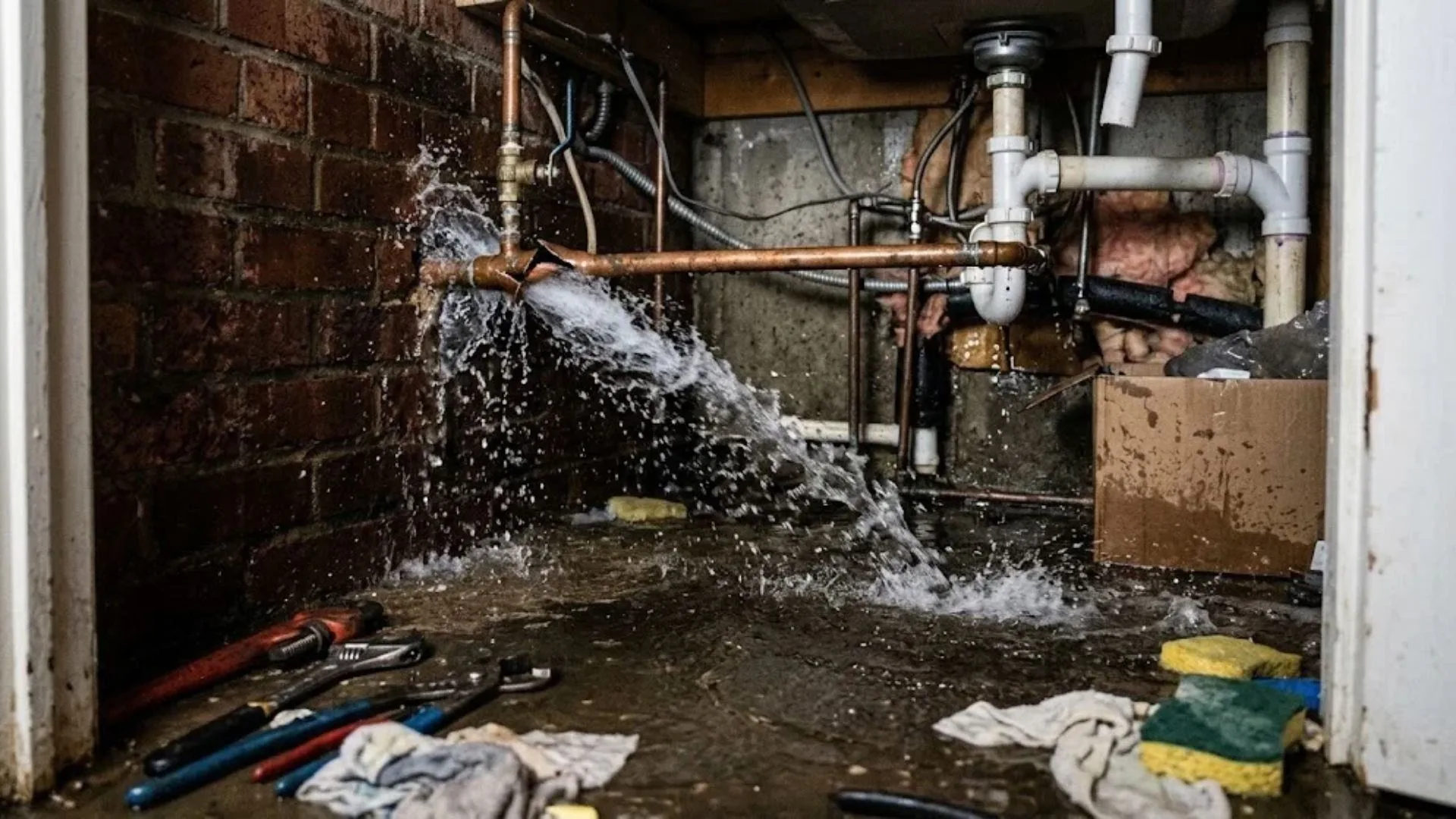
The first 60 seconds: stop the water
Do these in order. You do not need tools, and each step cuts the amount of water that reaches your floors.
- Find and close the main water valve. It is usually at the front of the house, near the water heater, or at the meter box. Turn a gate valve clockwise until it stops, or a lever handle a quarter turn across the pipe.
- Open a faucet to drain the line. Open a tap on the lowest floor, and one upstairs, so water in the pipes drains out instead of out the break.
- Turn off power near the water. If water is near outlets, appliances or the panel, switch off those breakers only if you can reach them without standing in water. Otherwise stay back and call.
- Shut off the water heater. Cut the electricity to an electric unit or set a gas unit to pilot, so the tank does not heat while it drains.
- Save what you can. Move belongings off the floor, photograph the damage, and call the 24/7 line.
If you smell gas, leave the building first and call your gas utility or 911 before calling a plumber.
What makes a pipe burst or crack
A pipe fails when the pressure inside exceeds what the weakest spot can hold. Common causes are corrosion that thins the wall, age, a loose or failed joint, a pressure spike after a valve closes fast, and accidental damage from a nail, a shovel or a tool. Ground movement can also strain buried and slab lines.
Goleta Water District reports a customer average of 21 grains per gallon, and hard water leaves scale that narrows pipes and raises friction. Scale does not cause bursts by itself, but a narrowed, aging line is more likely to fail at a joint. If one pipe has failed, ask the plumber to look at the neighbors in the same run.
Replacement pipe and fittings should meet the California Plumbing Code, which is built on the Uniform Plumbing Code (UPC), so ask the plumber which materials are being used before the wall is closed.
Pipe materials and how each one is repaired
The repair depends on what the pipe is made of. This table shows how the common household materials compare.
| Material | Common use | Repair notes |
|---|---|---|
| Copper | Water supply in many homes | Cut out the bad section and sweat in new pipe, or use a push-fit coupling. Pinholes in several places point to a failing run. |
| Galvanized steel | Older supply lines | Threaded joints often seize. A repair can disturb corroded neighbors, so replacement of the run is common. |
| PEX | Newer supply lines | Cut and join with crimp or clamp fittings. Flexible and quick, but not suited to sunlight exposure. |
| CPVC | Hot and cold supply | Solvent-weld a new section. Old CPVC can turn brittle and crack near fittings. |
| Cast iron | Older drain and waste | Cut out a section and join with no-hub couplings. Heavy, and rust inside narrows the pipe. |
When a broken pipe cannot wait: what to do now
Some pipe failures can be managed with the main valve off. These cannot, because the damage grows by the minute.
Water is pouring or spraying
A spray from a split pipe soaks walls and ceilings quickly. Close the main valve, open a faucet to drain, and call right away.
Water is in a ceiling or wall cavity
Trapped water bows drywall and can drop all at once. Shut off the main and keep people out from underneath.
The only bathroom or kitchen is down
A burst supply valve or pipe under the only sink or toilet leaves a household without water. Say so on the call.
A drain line is leaking sewage
A broken drain pipe puts wastewater into the crawlspace or slab. Stop using water and call the 24/7 line.
Cracked, leaking and pinhole pipes
Not every failure is a dramatic burst. A crack or pinhole leaks slowly, which is why it can go unnoticed. Each type of failure needs a slightly different repair.
Cracked or broken pipe
A crack from a hit, a bad joint or age lets water seep along the pipe. The plumber cuts back to sound pipe on both sides, installs a new section with proper fittings and tests the line under pressure. Patches and wraps are only stopgaps.
Copper pipe repair
Copper pipe develops pinholes where the wall has corroded. One pinhole can be cut out and the pipe re-joined. A run with several pinholes is a warning that the rest of the line is thin, and the plumber will say if a longer replacement is wiser.
Drain pipe repair
A broken drain pipe under a sink, in a wall or beneath the floor leaks wastewater and not clean water. The fix is a cut-out and replacement with matching pipe. See drain cleaning if the problem turns out to be a clog and not a break.
Supply valves and leaks at fixtures
A burst or broken shutoff valve under a sink or toilet is common and quick to fix. The plumber replaces the valve and its supply line. For the faucet itself, see faucet repair.
What changes the price of burst pipe repair
A simple valve swap and a split pipe in a wall are very different jobs. We give you a clear price before work starts, and these factors move it.
Sudden pipe bursts are often covered by homeowner policies for resulting water damage, though the cost of the pipe itself may not be. Photograph everything before cleanup, keep damaged items, and call your insurer promptly. Ask whether your policy requires an approved mitigation company.
After the water is off: drying, checks and what comes next
Once the break is repaired and the line is tested, drying is the next priority. Water left in drywall, insulation and subfloors can grow mold within a couple of days. Fans, open windows and a dehumidifier help, and wet insulation usually has to come out.
A burst often exposes a wider problem. If the pipe that failed was old, ask about a whole-house repipe, and if the water was hiding for weeks before it broke, leak detection can check the rest of the system. A leak under a concrete floor is a different job, covered under slab leak repair.
The same 24/7 line covers Santa Barbara and the other towns around Goleta.
Questions we hear most
Yes. The line is staffed 24/7, so a burst pipe at 3 a.m. or on a holiday gets the same dispatch as a weekday call. Tell the dispatcher where the water is coming from and whether the main valve is shut.
Same-day appointments are offered when available.
Look near the front of the house, by the water heater, in the garage, or at the meter box near the street. It is often a round wheel or a lever. If you cannot find it, close the shutoff at the meter with the key or tool only if you are sure how, and tell the dispatcher.
Pressure, corrosion, age, failed joints and accidental damage are the common causes. Hard water leaves scale, and a narrowed, aging line is more likely to fail at a joint. A plumber can check the water pressure and the rest of the run after the repair.
Use a clamp or wrap only to slow a leak while you wait. It is a temporary patch and can fail under pressure. A proper repair cuts out the damaged section and tests the line.
Often, yes. Replacing a stop valve and supply line is a short job. Tell the dispatcher what is leaking, and the plumber brings matching parts.
Yes. Property managers can call the 24/7 line with the unit address, and the plumber confirms the work order before starting. Tenants should shut the main valve and tell the manager right away.