
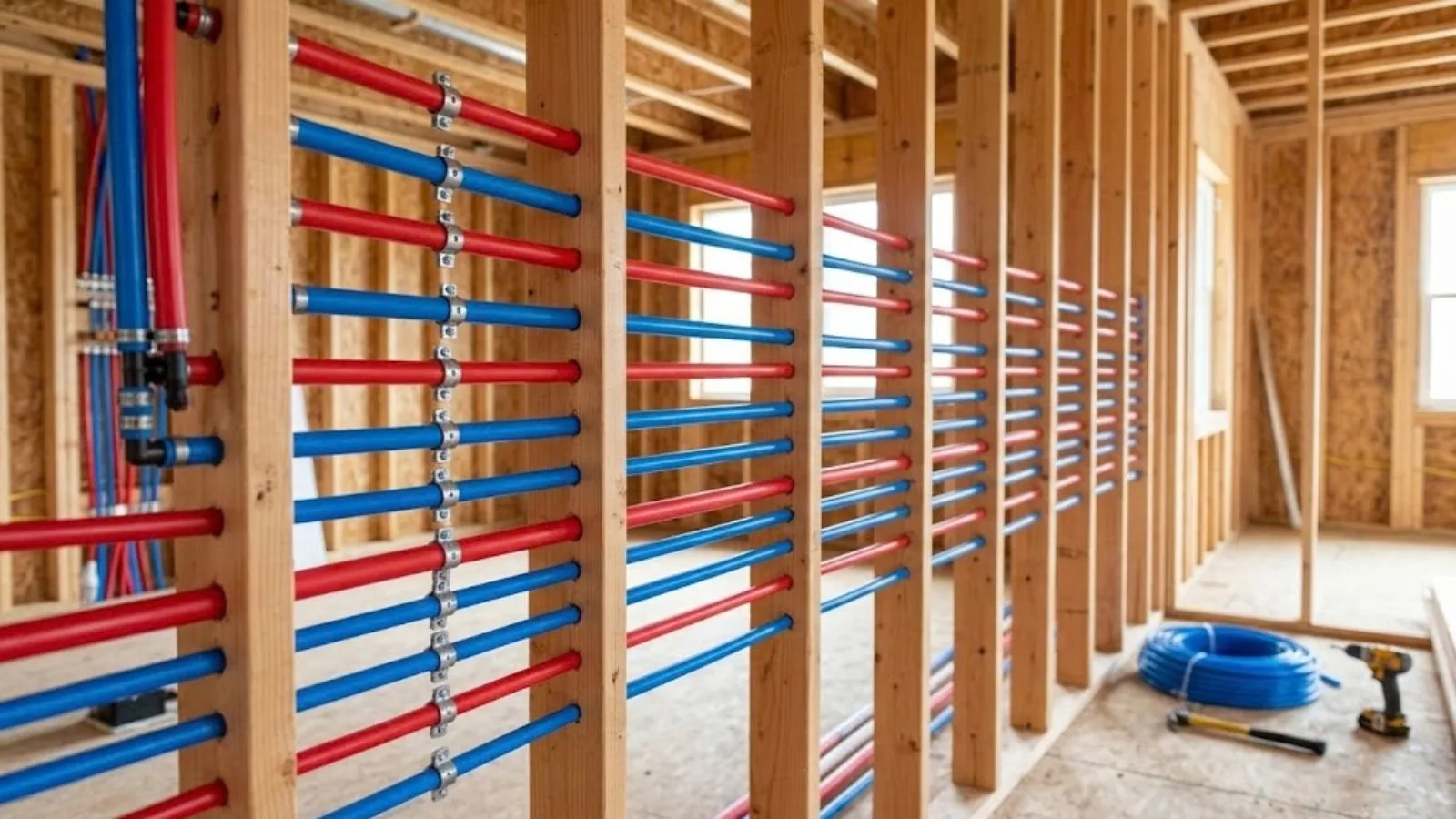
Repair the leak or replace the pipes?
A repipe replaces the water supply lines, which are the pressurized pipes that feed faucets, showers, the water heater and appliances. It does not usually include the drain lines. Drains carry waste out of the house, and they are a separate system.
One leak in an otherwise sound system is a repair. A second or third leak in a few years, or discolored water from several fixtures, tells you the whole system is wearing out. Replacing it at once is often steadier than paying for a string of separate calls. The 24/7 line also books planned work like this, so you do not need an emergency to ask.
New supply piping is installed to the California Plumbing Code, which is built on the Uniform Plumbing Code (UPC), and the choice of PEX, copper or CPVC should be named in your written agreement.
Signs your supply pipes are near the end
These patterns, especially in combination, are the usual reasons homeowners look at a repipe.
- Rusty or brown water from the tap. Rust-colored water that clears slowly after running points to corroding steel pipe, and it tends to be worse after a day away.
- Pressure that drops at many fixtures. Galvanized pipe fills with rust and scale from the inside, so flow narrows even when nothing leaks.
- Repeated pinhole leaks. Tiny leaks that keep appearing along copper runs signal thinning walls over a long stretch, not one unlucky spot.
- Green or blue stains at joints. Corrosion on copper fittings and green crusts at connections suggest the metal is breaking down.
- Galvanized pipe throughout. Gray, threaded steel pipe is a material many homeowners choose to replace before it fails, since it corrodes inside.
Before deciding, ask for leak detection if you suspect a hidden leak, since a single buried break is a repair and not a reason to repipe.
PEX, copper or CPVC: honest trade-offs
All three are accepted supply materials. The best choice depends on your house, your budget and the local water.
| Material | Strengths | Trade-offs |
|---|---|---|
| PEX | Flexible, few joints, fast to install in finished walls | Plastic can be damaged by sunlight and some chemicals, and fittings must be sized correctly |
| Copper | Long track record, handles heat and sun, no plastic | Costs more, more joints to solder, and aggressive water can pit it over time |
| CPVC | Lower material cost, resists corrosion | Rigid, can turn brittle with age, and can crack at stressed fittings |
How a repipe is staged
Every house is different, but most repipes follow the same sequence. Ask your plumber to show you each stage on the plan.
- Walk-through and plan. The plumber maps fixtures, shutoffs, the water heater and the path new pipe will take through walls, attic or crawlspace.
- Permit check. Permit rules vary, so ask City of Goleta Building and Safety, or County Building and Safety if your home is in an unincorporated area.
- Shutoff and rough-in. The water is shut off while new lines are run. Ask how long it will be off each day and whether service is restored overnight.
- Connections and testing. New pipe connects to fixtures, valves and the water heater, then the system is pressure tested before walls close.
- Patching. Access holes in drywall are patched, but painting and finishing may be a separate trade. Confirm who does what before work starts.
What 21 grains per gallon means for your pipes
Local water chemistry affects how long any pipe and fixture lasts, and it is worth knowing before you choose a material.
Very hard water
Goleta Water District's 2025 report gives a customer average of 21 grains per gallon, and the district calls the water very hard. Scale builds inside pipes.
Fixtures and appliances
Scale clogs aerators and shortens the life of water heaters and valves, so a repipe is a good time to add a shutoff or filter at the main.
Softening is optional
GWD's own page presents filters and softeners as a customer choice. See water softener and filtration if you want to treat the water after the repipe.
What changes the price of a repipe
Repiping is priced by the scope of the house, not by a flat number. We give you a clear price before work starts, and these are the biggest factors.
Homeowner policies usually do not pay to replace pipes that are worn out. They may cover sudden water damage from a break. If a repipe follows a covered loss, ask the insurer what it will pay for before work starts.
Permits and choosing a licensed contractor
Permit rules vary, so ask City of Goleta Building and Safety, or County Building and Safety for unincorporated areas such as Eastern Goleta Valley.
Check any contractor's license on the CSLB license check, since a number in an ad does not prove it is valid. California's Contractors State License Board lists the C-36 Plumbing Contractor class for water and gas lines from the owner's side of the meter. A written contract is required over $500, and it must name the contractor's license and who pulls permits.
The same board limits a down payment to the lesser of $1,000 or 10 percent of the contract price, unless the contractor has a blanket performance and payment bond.
If the problem is one break, not the whole system
If the pipes failed because of one burst or one slab leak, repair may be enough, and burst pipe repair or slab leak repair covers it. If the heater connections are corroded too, water heater repair can handle them on the same visit.
We serve homes in Goleta, Santa Barbara and the nearby area.
Questions we hear most
One leak in a healthy system is a repair. Repeated pinholes, brown water from several fixtures, falling pressure and galvanized pipe throughout point toward a repipe. A plumber can run a pressure test and show you the pipe condition before you decide.
The plumber runs new PEX, copper or CPVC to every fixture, connects to the water heater and shutoffs, tests the system and patches access holes. Galvanized pipe is usually removed or abandoned in the walls.
Neither wins in all cases. PEX is flexible, quick to install and has fewer joints. Copper has a long record and handles sunlight, but costs more. Local code and your plumber's advice on your water and house decide.
Permit rules vary, so ask City of Goleta Building and Safety, or County Building and Safety for unincorporated areas. The contract should state who pulls the permit.
Yes. Property managers can call the 24/7 line to book a walk-through, and the plumber confirms the work order and the unit address before starting. Staging units one at a time keeps tenants without water for shorter periods.