
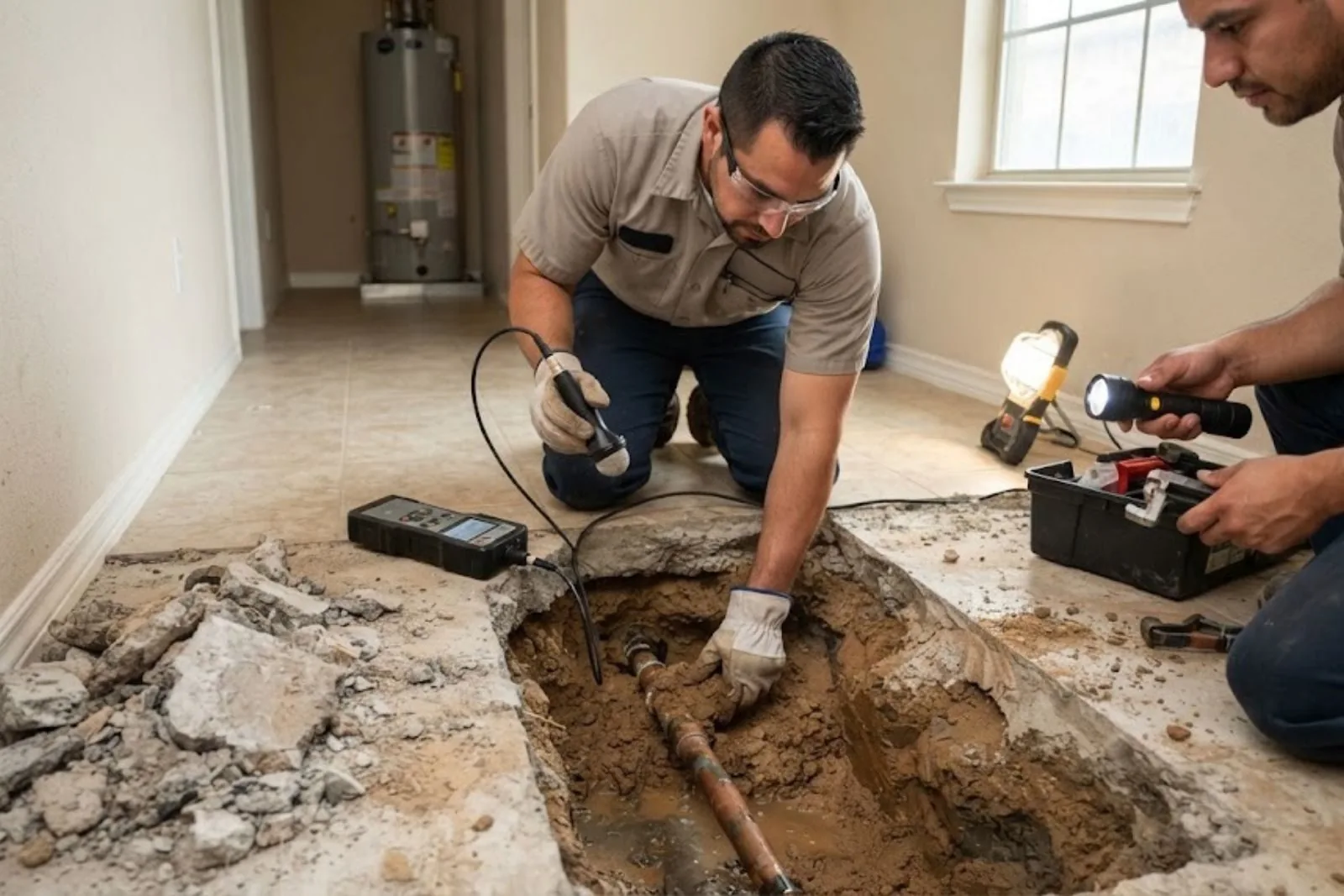
Why a leak under concrete is a different problem
In homes built on a concrete slab, some supply lines run beneath or through the concrete before they rise into the walls. When one of those lines leaks, the water soaks soil and concrete first, then looks for a crack or joint to rise through. By the time you see it, the leak has often run for weeks.
That delay is the reason a slab leak costs more the longer it runs. Water can undermine the soil, lift flooring and feed mold in the subfloor and baseboards.
Signs the leak is under the floor
No single sign proves a slab leak, but two or three together make it likely. Check these before you call.
A warm spot on the floor
A patch of tile or wood that feels warmer than the rest, especially with the heat off, can mean a hot line is leaking under it.
The sound of running water
A faint hiss or trickle in a quiet house with every tap closed suggests water moving under pressure.
The meter keeps turning
With all water off, a moving low-flow indicator means water is escaping somewhere on the system.
A bill that climbed
A gradual rise over a billing period or two with the same household habits points toward a hidden leak.
Damp, lifting or cupped flooring
Wood that buckles, tile that cracks and carpet that smells musty can all mean moisture from below.
Low hot water pressure
A leak on the hot side can pull pressure at the showers while the cold side feels normal.
The same symptoms can come from a leak in a wall or a running toilet, which is why the meter check and a pressure test come before anyone cuts concrete.
Right now: what to do when a slab leak is suspected
You cannot see the break, but you can limit the damage while you wait for the plumber. These steps cost nothing and can save the floor.
Shut the main water valve
Turn the main shutoff clockwise until it stops. If the meter indicator stops turning, the leak is inside your line.
Turn off the water heater
If the warm spot is on a hot line, switch off the heater or set a gas unit to pilot, so it does not heat or run dry.
Clear the floor
Lift rugs, move furniture and open windows to let damp flooring breathe while you wait.
Watch for gas or power risks
If you smell gas, leave the building first and call your gas utility or 911 before calling a plumber. Stay out of standing water near outlets.
How the leak gets located before concrete is cut
Breaking a slab in the wrong place is the costly mistake. Locating the break first limits the opening to a patch.
- Confirm with the meter and a pressure test. The plumber isolates the house supply and watches a gauge. A falling gauge with fixtures closed proves a leak, and shutting off sections narrows which line.
- Listen along the floor. A contact microphone picks up the hiss of escaping water through the slab. The loudest point marks the likely spot.
- Scan for heat. A thermal camera shows warm patches from hot lines. It works best on a leaking hot line and less well on a cold one.
- Trace the pipe path. An electronic locator follows the line so the opening lands on pipe, not beside it.
- Use tracer gas if the signal is weak. A nonflammable hydrogen and nitrogen mix is pushed into an emptied line, and a sensor finds the point where it rises through the floor.
Break the slab, reroute the line or repipe
There are three standard repair paths, and the right one depends on the pipe, the number of leaks and how the home is finished. Each has a real trade-off.
| Repair path | What it involves | Trade-off |
|---|---|---|
| Spot repair through the slab | Cut a small opening, expose the pipe, replace the bad section and patch the concrete | Fastest for one leak, but breaks flooring and does not fix other weak spots in the same line |
| Reroute the line | Abandon the slab line and run new pipe through walls or the attic | Avoids the slab and future leaks there, but needs wall or ceiling access and patching |
| Repipe the house | Replace the supply system, usually through walls and the attic | Fixes repeat leaks at the source, costs the most, and takes more days |
| Trenchless or tunneled replacement | Dig access points outside the house and pull a new line under the slab | Keeps interior floors intact, suited to some layouts only |
Pipes that run in or under a slab
Copper is the most common material for slab lines in older houses. Copper can develop pinhole leaks from corrosion on the outside, from abrasion where the pipe moves against concrete or rock, or from water chemistry on the inside. Goleta Water District reports a customer average of 21 grains per gallon, and very hard water leaves scale that can narrow pipes over decades.
Galvanized steel, found in much older construction, corrodes from the inside out and can clog before it leaks. PEX is flexible, runs in long sections with few joints and is often sleeved where it passes through concrete. Each material fails differently, so the plumber identifies the pipe before choosing the repair.
A cracked drain can also leak under the floor, and a sewer camera inspection shows whether the drain is the culprit.
What changes the price of slab leak repair
No two slab leaks cost the same, because the work ranges from a small cut to a whole new supply system. We give you a clear price before work starts, and these are the factors.
Many homeowner policies cover sudden water damage but may treat the cost to reach or repair the pipe differently. Some pay for access, such as breaking the slab, under a separate section. Take photos, keep the meter readings and the plumber's written findings, and call your insurer before major work starts.
Deciding what to do next
A single slab leak in a pipe that is otherwise sound is a candidate for a spot repair. A second leak within a few years is a strong sign the line is wearing out, and rerouting or a whole-house repipe begins to make sense. The plumber lays out both so the decision is yours.
If the first search is still open, start with leak detection to find out whether the leak is under the slab or in a wall. If a line has burst rather than seeped, see burst pipe repair. If the damage reached the water heater closet, water heater repair may be part of the visit.
We serve homes across Goleta and in nearby towns such as Eastern Goleta Valley, with the same 24/7 line.
Questions we hear most
Yes. The line is staffed 24/7, so a warm floor spot at midnight or a bill alarm on a holiday gets the same dispatch as a weekday call. Tell the dispatcher about the meter, any wet flooring and whether the main valve is shut.
Same-day appointments are offered when available.
A warm spot on the floor, a sound that comes from the floor and a meter that moves with everything off all point to the slab. A leak in a wall usually leaves a damp patch on the wall itself. A pressure test and a listening microphone confirm which.
Sometimes. Rerouting the line through the attic or walls avoids the slab, and tunneling from outside the house can avoid the interior floor in some layouts. The plumber explains which paths suit your pipe and house before work starts.
It depends on the policy. Many cover sudden water damage but treat the pipe itself and the access work differently. Call your insurer before repairs, and keep the plumber's findings and photos.
Tell your landlord or property manager first, because slab and supply repairs are usually the owner's job. Managers can call the same 24/7 line with the unit address, and the plumber confirms the work order before starting.