
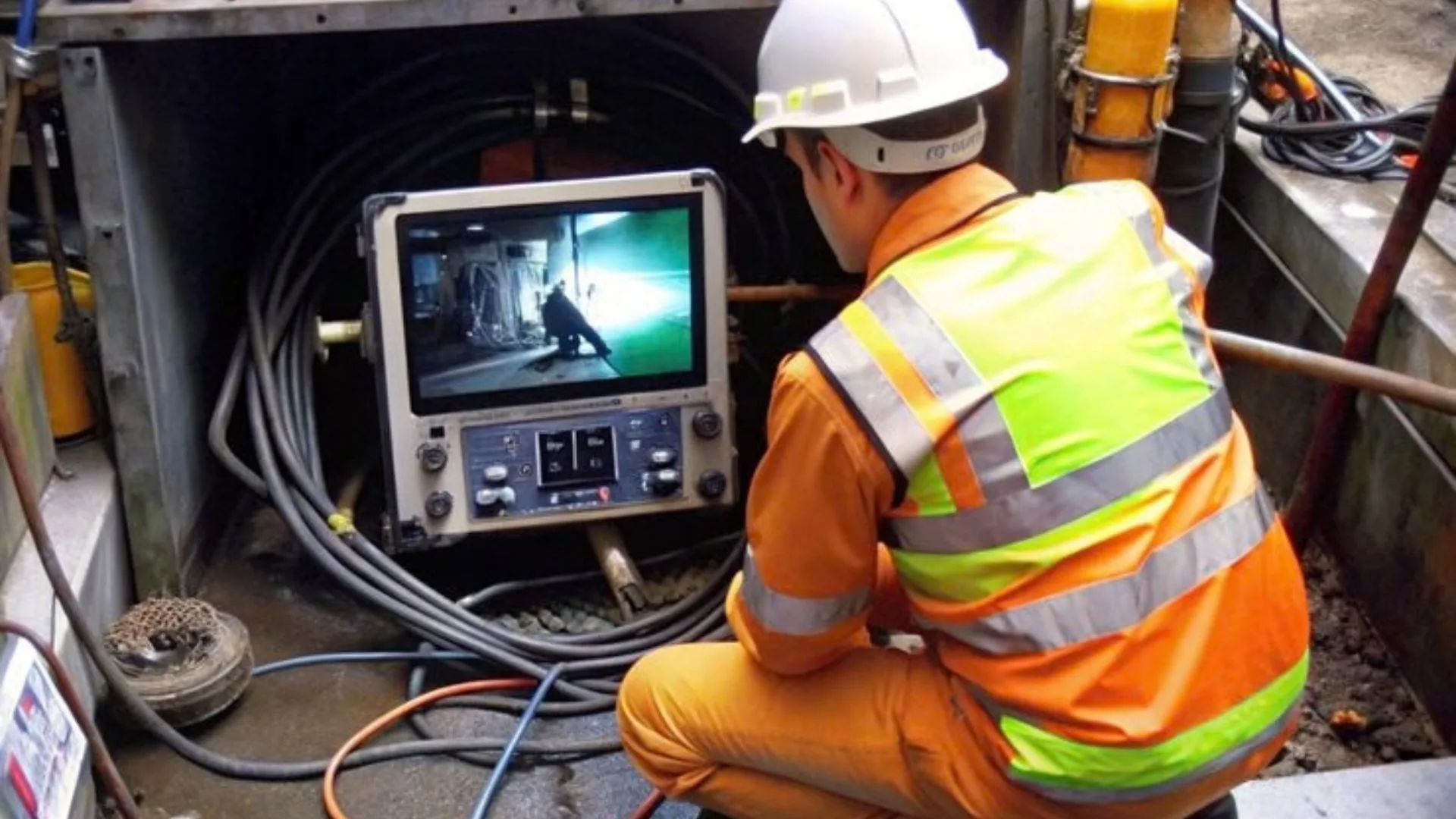
What the camera shows you
A sewer camera head sits on a flexible push rod and carries a bright light. It travels from a cleanout, a pulled toilet or a roof vent toward the street main, sending live video to a screen. The plumber watches the whole run and pauses on anything unusual.
A typical lateral is 4 inches in diameter, so the camera head is small enough to pass bends and joints. Clean pipe looks smooth and consistent. Defects stand out as breaks in that pattern, and their position is measured by a counter on the push rod.
What a camera shows is judged against the California Plumbing Code, built on the Uniform Plumbing Code (UPC), for slope, joints and cleanout access, so ask for the recording as part of the visit.
Defects the camera finds and what each one means
Each defect points to a different fix, which is why a picture matters before any quote.
| What you see | What it means | Usual next step |
|---|---|---|
| Fine roots at a joint | Roots are entering where sections meet | Cut back, then plan a repair |
| Offset joint | Two pipe ends no longer line up | Spot repair or section replacement |
| Belly (sag) | Pipe sinks and holds standing water | Replace that section at proper slope |
| Crack or break | Wall is split and may leak | Repair, depending on length |
| Mineral scale or grease | Wall is coated and narrowed | Hydro jetting if the pipe is sound |
| Tie-in | Another line connects here | Check that the junction is sound |
Locating the line and marking it
Many owners do not know where their sewer line runs. A small transmitter called a sonde can ride just behind the camera head. A handheld receiver above ground picks up its signal and shows both the position and the depth of the pipe.
That is how a plumber can mark the line on the lawn or driveway with paint or flags. The marks help you plan a fence, a tree or an addition without crossing the line, and they let a repair crew dig in the right place. If a leak is suspected, ask about leak detection as well.
When a sewer inspection is worth booking
You do not need to wait for a backup. These moments are good times to look.
- Before buying a home. A seller's inspection report rarely covers the lateral. A camera look can reveal roots or a belly before closing.
- After a repeat clog. If a line clogs again within weeks of a cleaning, a camera finds the cause.
- Before lining or a major repair. Lining only works in sound pipe, so inspect it first.
- After tree work or a remodel. Roots, heavy equipment and new loads can disturb a lateral.
- When an older home shows slow drains throughout. Age alone does not mean failure, but a camera tells you if the pipe is aging well.
What the camera cannot do
A camera shows the inside surface of the pipe. It cannot see through soil, so it cannot tell you how much ground has washed out around a crack. A long line with many bends or standing water may limit how far the camera travels, and a full line must be cleared before it can be inspected.
It also cannot prove a pipe is watertight. A hairline crack may not be visible, and a very old pipe can look fine on video yet fail under load. The plumber will say what was seen and what was not. If a line is too clogged to inspect, sewer line cleaning may come first.
The result you take home
Ask for a recording and a short written summary. A good record lists the date, the entry point, where each defect sits in feet from that point, and a plain description of what it is. Photos or video clips of the worst spots are helpful too.
You can show that record to your district, an insurer or another contractor. If you are in a dispute over who owns a problem, a recording shows exactly where it sits.
What changes the price of a sewer camera inspection
Inspection price follows the effort, and we give you a clear price before work starts. These factors affect it.
Insurers rarely pay for a planned inspection, but a recording can support a claim after a sudden backup. Check what your policy requires.
Pairing the camera with cleaning, repair and the district
Inspection is rarely the end. Findings lead to cleaning, jetting or sewer line repair, and the camera makes those jobs more precise. A homeowner who has the recording can decide on the scope instead of paying for a guess.
Ask your district about your lateral boundary before you plan work. Goleta Sanitary District's FAQ page says the owner maintains the lateral from the building to the street main. Which district serves a given street depends on the address. In Santa Barbara and other nearby areas, ask the local sewer provider.
Questions we hear most
The price depends on access, line length and whether cleaning is needed first. The dispatcher gives you a clear price before work starts. Ask about adding a locate or a written summary when you book.
It shows the condition of the pipe, such as roots, offsets, bellies and cracks. The plumber explains what was found and which repair options fit. A single defect often means a spot repair, while damage at several joints may point to replacement.
Yes. A transmitter on the camera head lets a handheld receiver show position and depth above ground. The plumber can mark the line on your yard.
Often, yes. General home inspections usually do not include the lateral. A recording before closing gives you facts to use in negotiation or planning.
Ask your sanitary district. Goleta Sanitary District's FAQ says the owner maintains the lateral from the building to the street main. Which district serves your street depends on the address.
Yes. A property manager can call with the address and ask for the recording and summary to be sent to the owner. Mention it when booking.