
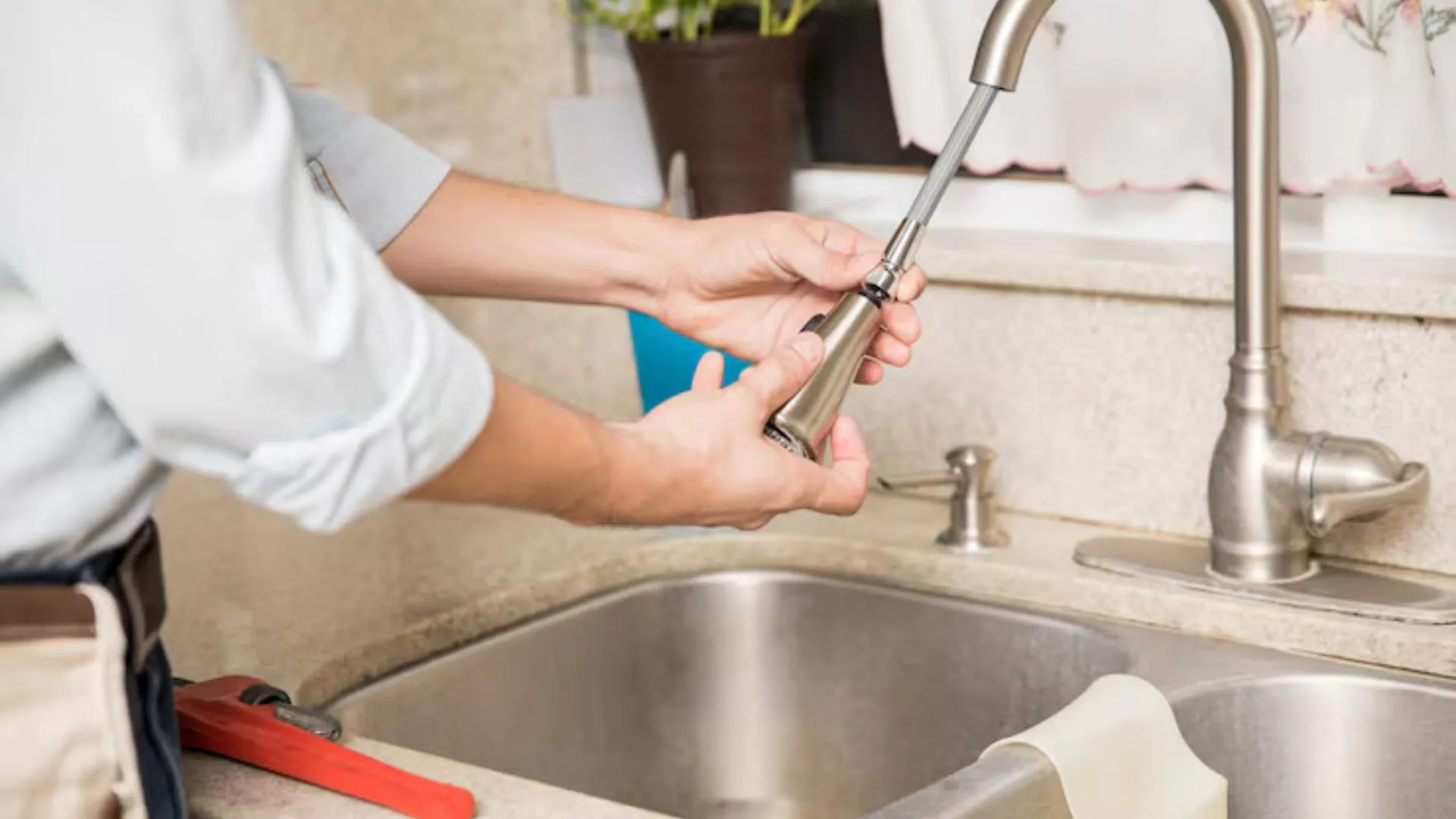
Signs a faucet or valve is failing
Fixtures usually warn you before they fail. These signs are worth a call before they become a flood.
A drip that never stops
A single-handle faucet that drips from the spout usually has a worn cartridge. A drip from the base of the handle points to O-rings.
Handles that stick or grind
Mineral scale in the cartridge makes handles stiff. Forcing them can snap the stem.
Water pressure drops at one fixture
Scale in the aerator or a partly closed stop valve restricts the flow.
Wet cabinet floor
A damp base of the cabinet under the sink means a supply line, a stop valve or the faucet body is seeping.
Hot and cold mix wrongly
A cartridge that no longer seals lets hot water cross into the cold side.
A spray behind the shower wall
A cracked valve body or a failed joint leaks inside the wall, and the first sign is often a stain.
When a valve that will not shut off is an emergency
If the shutoff does nothing, water keeps flowing until you reach a valve farther upstream. Work through these four steps in order.
Try the fixture stop
Under a sink, turn the oval handle behind each supply line clockwise. If it spins freely or leaks at the stem, the valve is worn out and will not hold.
Close the main
The main shutoff is usually where the water line enters the house, often near a hose bib or beside the meter. Turn it clockwise until it stops. A stiff main can need two hands, and a wrench is better than force.
Open a low faucet
After closing the main, open the lowest tap in the house to drain the lines. That relieves pressure so the broken part stops pushing water.
Switch off power if water is near it
Water around an outlet, a water heater or a power strip needs the circuit off first. If you cannot reach the panel safely, step back and call.
If neither the stop nor the main will close, tell the dispatcher at once. A seized main valve is a same-day job, and the plumber can replace it.
Dripping faucets, cartridges and hard water
Goleta Water District's 2025 water quality report gives a customer average of 21 grains per gallon. In practice, that scale collects in aerators, on the seats inside a cartridge and in the small ports of a shower valve. The result is a faucet that drips, sputters or runs weak long before the finish wears out.
A cartridge faucet drips when its rubber seals harden or its ceramic discs scale over. Replacing the cartridge is usually quicker than rebuilding it. Compression faucets with separate hot and cold handles need new washers and seats. A faucet from the early 2000s or older is often cheaper to replace than to chase.
Soaking an aerator in white vinegar clears light scale. If the same faucet needs it every month, a whole-house softener or filter protects every fixture, though it is a larger decision than one repair.
Supply stops and fixture connections are covered by the California Plumbing Code, which is built on the Uniform Plumbing Code (UPC), which is one reason a loose stop valve is worth fixing properly rather than patching.
Which fixture, which fault, which repair
This table covers the fixture calls that come in most often.
| Fixture | Typical fault | Repair |
|---|---|---|
| Kitchen or bath faucet | Worn cartridge, scaled aerator | Replace the cartridge or the faucet |
| Under-sink stop valve | Seized, leaking at the stem | Replace the valve and supply line |
| Tub spout and shower valve | Diverter fails, valve leaks in the wall | Replace the diverter or the valve body |
| Outdoor spigot | Leaks at the stem or the wall | Replace the stem or the spigot |
| Laundry box and washer valves | Drips, leaks at the hose | Replace the valves and hoses |
Supply lines and stop valves under the sink
The braided supply line that runs from the stop valve to the faucet is a common failure point. Its stainless sheath hides corrosion, and a hose that is more than eight to ten years old can burst at the nut with no warning. Replace both lines whenever a faucet is changed, since the cost is small compared with a flooded cabinet.
Old multi-turn stop valves, the kind with a round handle, tend to freeze in the open position and leak when moved. Newer quarter-turn ball valves close with a short swing and hold reliably. If you have a valve that has not been turned in years, expect it to leak the first time you close it, and call before you try.
What changes the price of a fixture repair
A new washer and a new shower valve inside a tiled wall are very different jobs. We give you a clear price before work starts, and these are the factors that move it.
Sudden supply-line or valve bursts are often covered, but a slow drip that rotted a cabinet over time may not be. Photograph the leak, keep the failed part and call your insurer before repairs.
Tubs, showers, spigots and the laundry box
A tub spout that sends water to the showerhead only trickles when the diverter wears out. That is a quick fix. A showerhead that leaks from the arm usually needs plumber's tape and a new gasket. A leak at the wall behind the valve is another matter, and a stain on the ceiling below is the cue to call before the drywall softens.
Outdoor spigots leak at the stem or where the pipe passes through the wall. A drip inside the wall is the damaging one, because it soaks the framing unseen. The laundry box behind the washer has two valves and a drain standpipe, and a drip at either deserves a prompt fix. A slow tub or shower drain is a drain-cleaning job, while a wet wall calls for leak detection.
Other fixtures that come with the call
A kitchen sink repair often overlaps with a garbage disposal that leaks from the housing. Dishwasher air gaps and jetted tub pumps are handled the same way, and a supply line that has burst in the wall becomes a burst pipe call. If you rent in Santa Barbara or Goleta, tell the property manager first, then call the same 24/7 line with the unit address.
Questions we hear most
Yes. The line is staffed 24/7, so a valve that will not close at midnight gets the same dispatch as a weekday call. Tell the dispatcher what you have already tried so the right valves are on the truck.
Close the main and open a low tap while you wait.
Do not force it. Close the main water valve, then call. A seized stop valve is replaced with a quarter-turn ball valve, and a new supply line goes in at the same time.
A newer faucet with a known cartridge is worth repairing. An older one, or one pitted by hard water, is usually better replaced because parts are hard to find.
That points to the diverter or the shower valve. The plumber checks whether the leak is at the spout or inside the wall, since a wall leak needs a different repair.
Yes. Spigots, laundry boxes, washer valves and dishwasher connections are all part of the fixture work. Describe where it leaks and the dispatcher plans the parts.
Property managers can call the same 24/7 line, give the unit and access details, and the plumber will confirm the work order before starting.