
If you smell gas, leave first
If you smell gas, leave the building and call your gas utility or 911 BEFORE calling a plumber. Do not turn on lights, use a phone inside or start a car in an attached garage. No plumber can promise a response time for a gas smell, and the utility and the fire department are the right first call.
Once the utility has made the building safe, a licensed plumber can repair or install gas piping and gas appliances. CSLB's C-36 plumbing licence covers gas piping and gas appliances. Gas leak repair, a new gas line for a range, dryer or fire pit, and inspection of existing gas lines are all planned or follow-up work, handled after the utility says it is safe.
Remodels and additions: supply, drain and vent
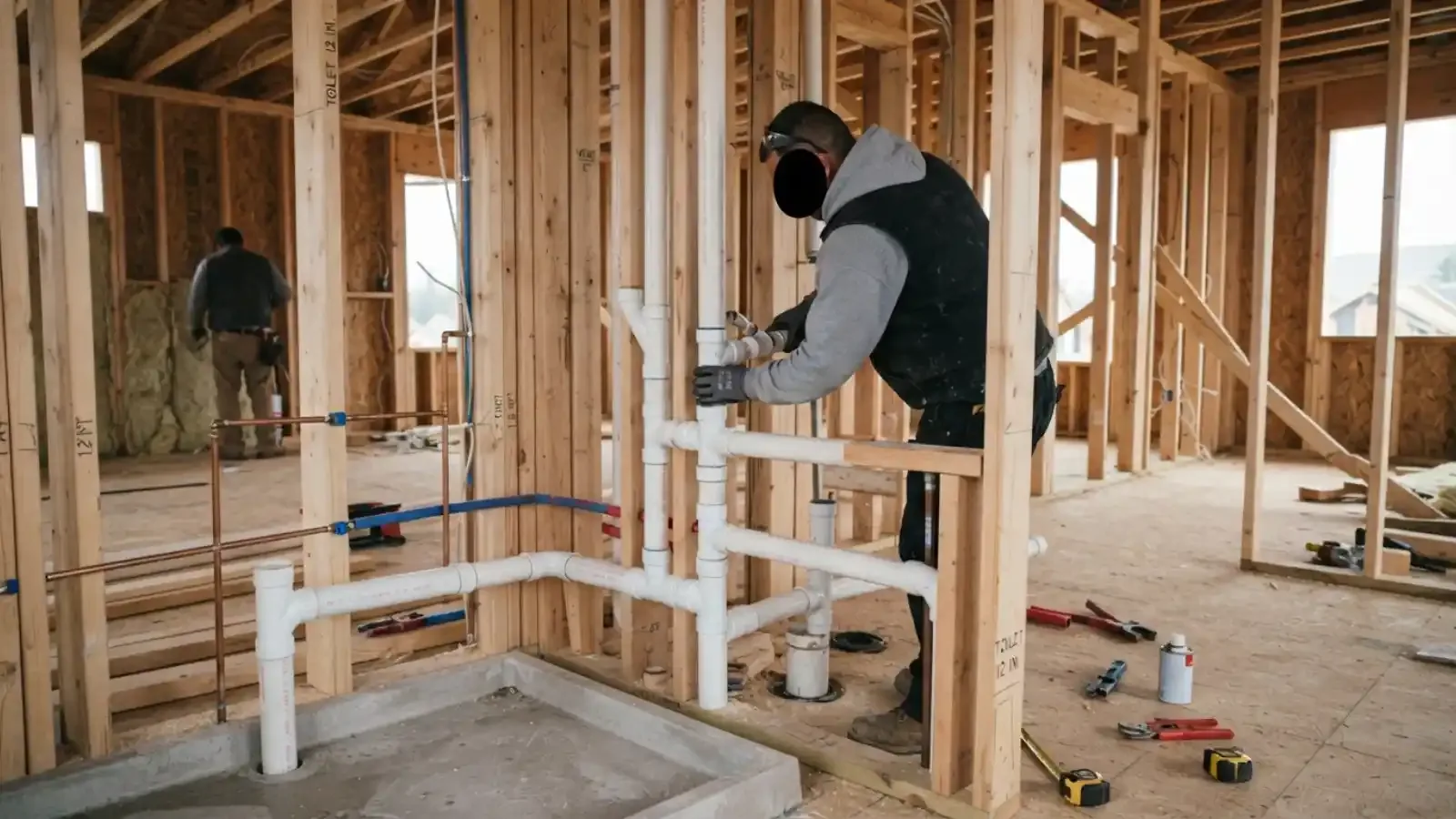
Every new fixture needs three things. A supply line brings in hot and cold water, a drain carries waste away at a slope of about one quarter inch per foot, and a vent lets air in behind the water so traps do not siphon. A toilet needs a 3 inch drain, a shower about 2 inches and a lavatory 1.25 to 1.5 inches.
Rough-in is the stage before walls close, when pipes are run and left stubbed out for the fixtures. Getting it right matters, because moving a drain after the drywall and tile are done costs far more than moving it on paper. Tell us where the fixtures go and which way the floor joists run.
Pipe materials and where they fit
Each material has a place. This table gives the general picture.
| Material | Common use | Notes |
|---|---|---|
| Copper | Supply lines | Long-lasting, can pit in some water |
| PEX | Supply lines, remodels | Flexible, fewer joints, not for outdoor sun |
| ABS | Drain and vent | Black plastic, common in residential drains |
| PVC | Drain, vent, irrigation | White, glued, check local code for indoor use |
| Cast iron | Older drains | Quiet but can rust inside |
Fixture installation and relocating lines
New fixtures go in after rough-in. That includes toilets, sinks, shower valves, tubs, jetted tubs and kitchen faucets. A tub needs its drain and overflow assembled before it is set, so those must be tested for leaks first. A jetted tub also needs an electrical circuit, which is a separate trade.
Relocating a sink or a toilet is more than a long pipe. The new run needs slope, a vent and room in the wall or floor. A toilet moved even a few feet may need a cut through the slab or a new branch, and that is where a rough-in drawing helps. Reconnecting a sink after a countertop replacement is a smaller job and is often done in one visit.
If you are installing a water heater, see water heater repair for what plumbers check, and ask us about its gas or electric hookup.
What changes the price of installation
A single sink reconnection and a full bathroom rough-in are different jobs. We give you a clear price before work starts, and these are the factors that move it.
Installation of new fixtures is not an insurance matter, but a plumbing failure after bad work may be. Keep your written contract and the permit record, since both matter if a claim comes later.
Permits and inspection
Permit rules vary, so ask City of Goleta Building and Safety, which handles building, electrical, plumbing and mechanical permits in the city. For unincorporated areas such as Isla Vista and Eastern Goleta Valley, the County of Santa Barbara Building and Safety Division issues them. The California Plumbing Code sets the standard for new work.
An inspection checks that the work is done correctly, usually before walls close. Rough-in is inspected first, then the finished fixtures. Ask your plumber who pulls the permit, since the contract should say so.
How to hire a plumber for installation
Check the licence on the CSLB lookup page before you sign anything. A licence quoted in an ad does not prove it is valid. California requires a written contract for work over $500, and it must show the contractor's licence details and who pulls permits.
A down payment is limited to the lesser of $1,000 or 10 percent of the contract price, unless the contractor has a blanket performance and payment bond. Ask for the price in writing before work starts. If the quote is a lot lower than the rest, ask what is left out.
If your project includes water treatment, softener and filter installation is covered separately. Pipe replacement for an old house is a different job from leak detection, though one often leads to the other.
Questions we hear most
Rarely. Rough-in needs access to the studs or the slab. The plumber looks at the room and tells you what has to open.
Permit rules vary, so ask City of Goleta Building and Safety, or County Building and Safety for unincorporated areas. Your plumber can tell you what to ask.
Leave the building and call your gas utility or 911 before you call a plumber. Do not use switches or phones inside. A plumber handles repair once the utility has made it safe.
Yes. A licensed plumber with a C-36 licence covers gas piping and gas appliances. Permit rules vary, so ask City of Goleta Building and Safety.
PEX is flexible and faster to run through existing walls. Copper lasts a long time and works in exposed areas. The choice depends on access and budget.
Yes. Call the 24/7 line and describe the units, the schedule and the access. The plumber confirms what is needed before work starts.