
What a main line backup looks like in the lowest drain
A blocked main line pushes waste back up the pipe until it finds the lowest opening. That opening tells you a lot.
A ground-floor shower fills during a flush
The shower drain sits lower than the toilet, so waste from the toilet pushes up through it when the main is blocked.
A floor drain in the garage or laundry bubbles
Floor drains are often the lowest point on the line. Dark water or odor coming up means the main cannot carry the load.
Several toilets gurgle at once
Air displaced by a blockage far downstream has to escape somewhere, and fixtures close to the main often complain first.
The outdoor cleanout smells or holds water
Standing waste in the cleanout means the blockage is between that point and the street.
One slow drain is a branch problem. When two floors or several fixtures react together, the main line is involved. See drain cleaning for the single fixture version.
Right now: backup in progress
If sewage is rising while you read this, these four moves protect the house.
Stop adding water
Do not flush, run the dishwasher or start laundry. Each gallon you add has nowhere to go but out of the lowest drain.
Cover and block the low drain
A rubber plug or a towel-backed bucket can slow a floor drain. Do not force a plug into a drain that is under pressure.
Lift valuables and cut power if needed
Move rugs, boxes and electronics from the floor. If water is near an outlet, shut off that circuit at the panel only if you can do so dry.
Call and describe the lowest drain
Tell the dispatcher where the water appears and whether neighbors have the same issue. That helps decide between your lateral and the street main.
How a cleanout gets used
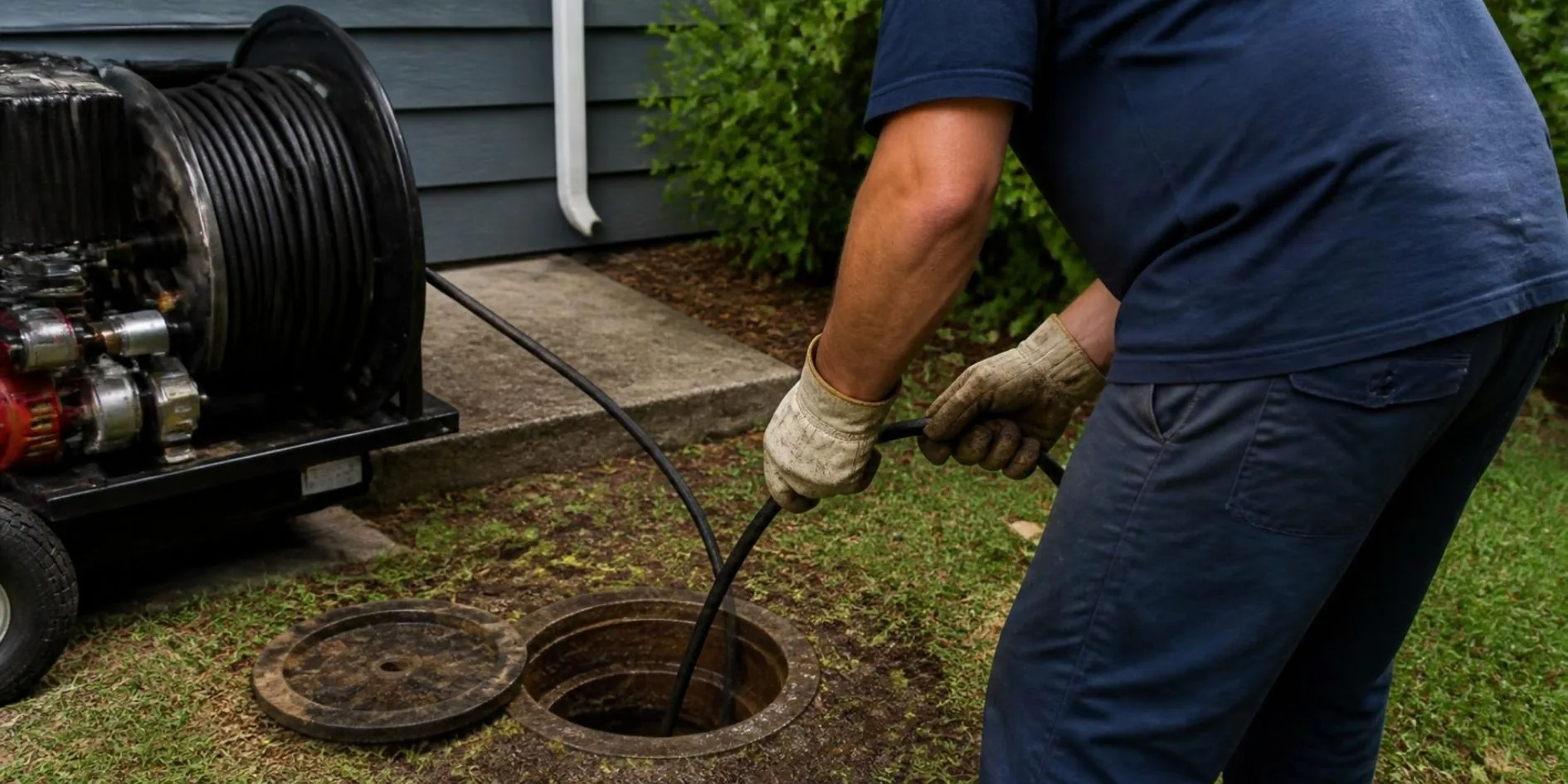
A cleanout is a capped pipe, usually 4 inches wide, that gives direct access to the lateral without taking a toilet off the floor. The plumber removes the cap slowly, because a full line can release pressure and waste. A drain machine with a cutting head or a jetter hose then goes in toward the blockage.
After the path is open, a camera can run through the same cleanout to check the pipe. That is how a plumber confirms whether the clog was a wad of wipes, a grease plug or a root mass. If the cleanout is full when opened, the blockage is downstream. If it is empty, the problem sits between the cleanout and the house.
Goleta Sanitary District's October 2021 newsletter asks customers to keep grout and cement out of a cleanout. Cement hardens in the pipe and can turn a simple clog into a replacement. Keep the cap on, and tell contractors who work near it.
The cleanout the plumber uses is one the California Plumbing Code, built on the Uniform Plumbing Code (UPC), expects on a building sewer, and a blocked or buried cleanout is worth fixing at the same visit.
Main line, lateral or street main: who clears it
Where the blockage sits decides who is responsible. This table shows the usual cases.
| Where the blockage is | How you can tell | Who handles it |
|---|---|---|
| House branch line | One floor or one fixture group is slow | Owner, through a plumber |
| Lateral (house to street) | Outdoor cleanout holds waste | Owner, through a plumber |
| Street main | Neighbors also back up and the cleanout is full | Sanitary district |
| Shared building lateral | Lowest unit backs up first | Property owner or manager |
Wipes, grease and what the districts ask of you
Goleta Sanitary District's October 2021 newsletter says to flush only human waste and toilet paper. It also says packaging must say DO NOT FLUSH from 1 July 2022 and that fats, oils and grease belong in the trash. Wipes labeled flushable still do not break down like paper, so they knit together in the main and catch everything behind them.
The newsletter adds that a clogged lateral may need replacement at owner cost. That is why a repeat sewer clog deserves a camera look, not only another cleaning. If the pipe is failing, sewer line repair is the next conversation.
What changes the price of sewer line cleaning
A main line clearing can be quick or long, depending on the line. We give you a clear price before work starts, and these factors move it.
Many homeowner policies exclude clearing a clog but may cover damage from a sudden backup if you added the right endorsement. Photograph everything before cleanup and read your policy.
Storm drains and yard drains in a rainy season
Santa Barbara Airport averages about 17 inches of rain a year, and January is the wettest month. That rain arrives in a few storms. Leaves, mulch and silt wash into yard drains and catch basins and form plugs, so a drain that worked in September can flood a patio in January.
Yard drains and storm drains are meant to be separate from the sewer. They carry rain, and tying one into the sewer lateral adds storm flow to a pipe sized for household waste. A plumber can clear a plugged yard line with a cable or jetter and check it with a camera. If the same drain floods every winter, ask to have it cleaned before the first storm and again after the leaves fall.
Grease trap cleaning for restaurants
A grease trap catches fat before it reaches the sewer. When it fills, grease passes through and hardens in the line. A trap that is pumped on a schedule keeps the kitchen drain open. In Santa Barbara and Goleta alike, restaurants rely on a scheduled pumping. If a trap overflows or the kitchen line backs up between pumpings, call and describe the symptoms. For a large kitchen, see hydro jetting for the line that carries the grease.
Questions we hear most
Yes. The line is staffed 24/7, so a backup at midnight or on a holiday gets the same dispatch as a weekday call. Tell the dispatcher where the water is coming up so the right equipment goes out.
Stop using water at once, keep people away from the area and call the 24/7 line. Do not use chemical drain cleaner on a backed-up main line. It rarely reaches the blockage and makes the work less safe.
If neighbors also have backups, or the outdoor cleanout is full when opened by a plumber, the blockage is downstream and may be in the main. The district handles the main, and the owner maintains the lateral to the street.
Goleta Sanitary District's guidance is to flush only human waste and toilet paper. Wipes knit together and catch other debris, so even products sold as flushable can contribute to a main line blockage.
Yes. Describe where the drain is and what happens in a storm. A cable, jetter and camera can clear and check the line. Cleaning before the rainy season lowers the chance of a flood. Roots can also invade a yard line, which leak detection and a camera can sort out.
Describe the trap size and when it was last pumped. The dispatcher will tell you whether it needs pumping or the kitchen line needs clearing.
Yes. A manager can call the 24/7 line with the unit address, and the plumber confirms who approves the work before starting.