
Cold bursts, lukewarm water and what to do about error codes
Tankless units fail in recognizable ways. These are the symptoms callers describe most, and what each usually points to.
A cold burst between two hot ones
Shut the tap briefly and reopen it, and a slug of cold water arrives before the heat returns. This cold water sandwich happens because pipe water cools while the unit is off. A recirculation setup or a small buffer tank can shorten it.
Lukewarm output
Scale on the heat exchanger or a clogged inlet filter restricts flow, so the unit cannot reach the set temperature. A flush often restores it.
No hot water at low flow
Most tankless units need a minimum flow, often around half a gallon per minute, to fire. A barely open tap may not trigger the burner.
Short cycling
A unit that fires, shuts down and fires again may have a flame sensor fault, a gas supply that is too small or a venting restriction.
Many units show a code on a display. Look it up in the manual or give it to the dispatcher with the model number.
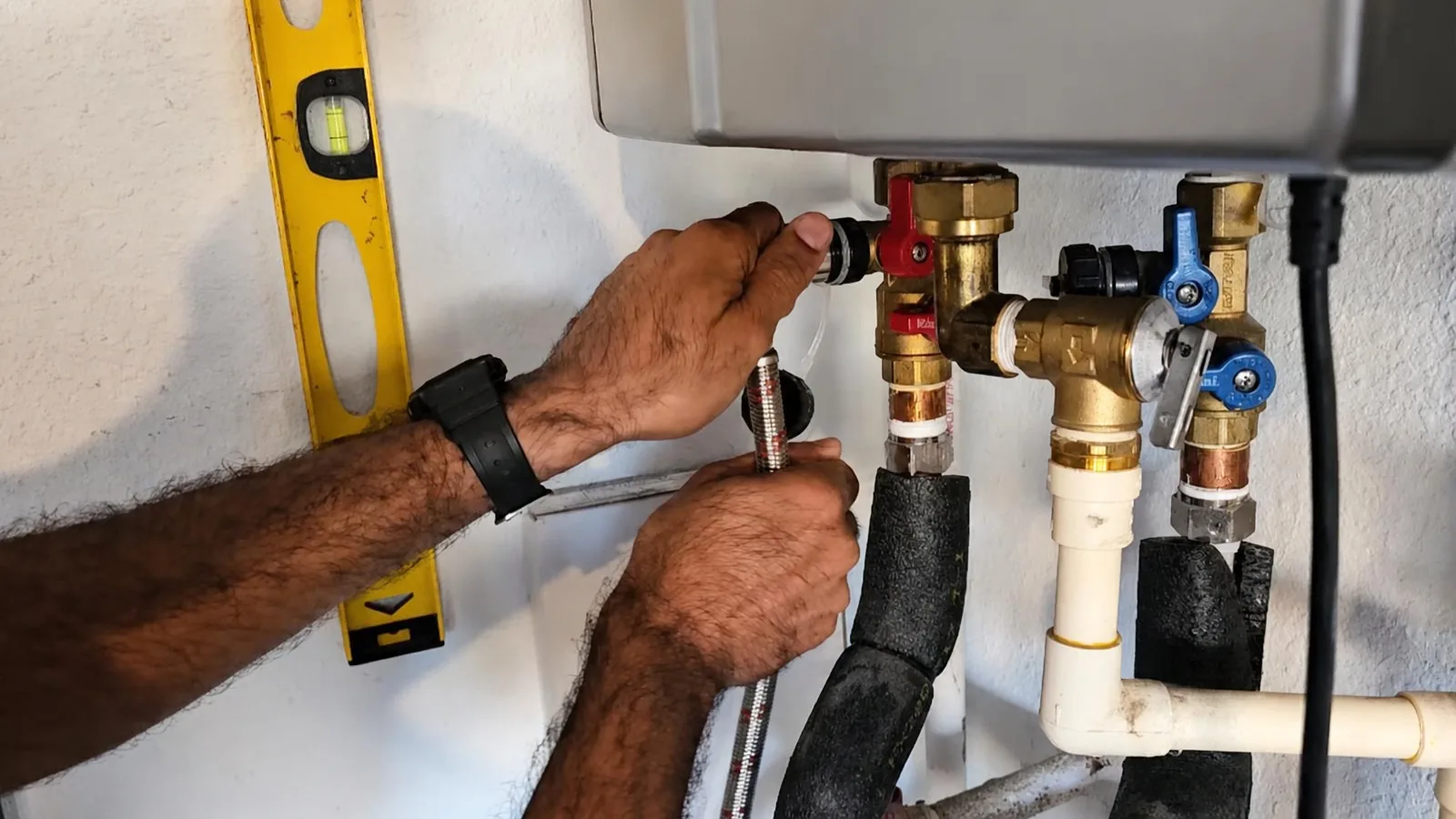
The tankless flush: how descaling works
A flush dissolves scale from the heat exchanger. The manufacturer's instructions set the solution and time, and these are the general steps.
- Shut off power and fuel. The unit is turned off, gas is closed and the water is isolated at the service valves.
- Connect a pump and hoses. A small pump circulates a descaling solution, often food-grade white vinegar or a made-for-purpose cleaner, through the heater.
- Circulate for the set time. The solution runs through the heat exchanger for the time the manufacturer specifies, often around an hour.
- Rinse and clean the filter. The unit is flushed with fresh water and the inlet screen is pulled and cleaned.
- Restore and test. Valves are reopened, air is purged, and the plumber checks flow, temperature and codes.
Service valves, also called isolation valves, make this flush possible. A unit installed without them can still be flushed, but the plumber may need to add them.
Why 21 grains per gallon makes flushing matter
The Goleta Water District 2025 report gives a customer average of 21 grains per gallon. A tankless heat exchanger has narrow passages, and a thin layer of scale there reduces flow and heat transfer. The unit then burns more gas to deliver less, overheats and may shut down on a high-limit code.
That is why makers often recommend a flush at least once a year in hard-water areas. A softener or filter ahead of the unit can lengthen the interval, as explained on the softener page.
Error code and symptom: what to try and what to call about
Codes vary by brand, so this table groups them by cause.
| Code family or symptom | Likely cause | Try first, then call |
|---|---|---|
| Ignition failure | No gas, dirty igniter or flame sensor | Check the gas valve is open, then call |
| Exhaust or vent fault | Blocked or loose vent | Call, do not run the unit |
| Overheat or high limit | Scale or low flow | Clean the inlet filter, then flush |
| Flow sensor fault | Debris or a failed sensor | Clean the filter, then call |
| Condensate fault | Blocked drain or neutralizer | Check the drain line, then call |
Installing tankless: gas line, venting and condensate
A tankless gas unit can need a gas line larger than the one that fed a tank, often 3/4 inch, because the burner draws a lot of gas at once. The plumber sizes the line to the unit's input and the length of the run. Gas piping and appliance work fall under a licensed plumbing contractor.
Venting changes too. Condensing tankless units are efficient enough that their exhaust is cool, so they use plastic vent pipe, and they produce acidic condensate that must drain through a neutralizer to a proper drain. Non-condensing units use stainless steel vent. If you smell gas at any time, leave the building and call your gas utility or 911 before calling a plumber.
Service it or replace it?
Many tankless problems are service problems. Here is how the two paths compare.
Service the unit
- Scale, a dirty inlet filter or a clogged condensate line
- A single failed sensor, igniter or flow part
- A unit that still heats at full flow after cleaning
Replace the unit
- A cracked or leaking heat exchanger
- Repeated high-limit trips after flushing
- Parts no longer available for an old model
We service as well as replace, and the plumber tells you which applies after testing.
What changes the price of tankless service
A flush, a repair and a new install are different jobs. We give you a clear price before work starts, and these are the things that move it.
Tankless units are usually excluded as wear-and-tear, but a sudden leak from the unit is a water-damage claim like any other. Photograph the unit and the damage before anything is dried or removed.
Switching from a tank to tankless in a Goleta home
A tankless unit hangs on the wall and frees up the closet or garage corner a tank used. It suits Old Town homes and apartments near UC Santa Barbara where floor space is tight. The trade is a bigger gas line, venting and a yearly flush.
If you are weighing the choice, compare it with a standard tank on the installation page. If your current tank has already failed, replacement covers swapping it out quickly. Callers in Eastern Goleta Valley and Santa Barbara book the same visits.
Questions we hear most
At least once a year is common advice in hard-water areas, and the Goleta Water District reports 21 grains per gallon. Check your manufacturer's instructions. A softener may stretch the interval.
That cold water sandwich comes from water in the pipes cooling while the unit shut down. Running longer, using a recirculation line or adding a small buffer tank can help.
Scale on the heat exchanger or a clogged inlet filter is the usual cause. Flushing and cleaning the screen often fixes it. If it does not, a sensor or gas supply problem is next.
Codes differ by brand. They usually point to ignition, venting, flow, overheating or condensate faults. Give the dispatcher the model and code.
Most units need a minimum flow, often about half a gallon per minute, before the burner lights. A partly open tap or a clogged aerator may fall below it.
This page covers tankless service as well as replacement, including flushing, error code diagnosis and repair of common faults. The plumber tests the unit and tells you if it is a repair or a replacement.
Usually yes. Gas models often need a larger gas line, and condensing models use plastic vent pipe and a condensate drain. The plumber checks both before quoting.