
What the camera actually does
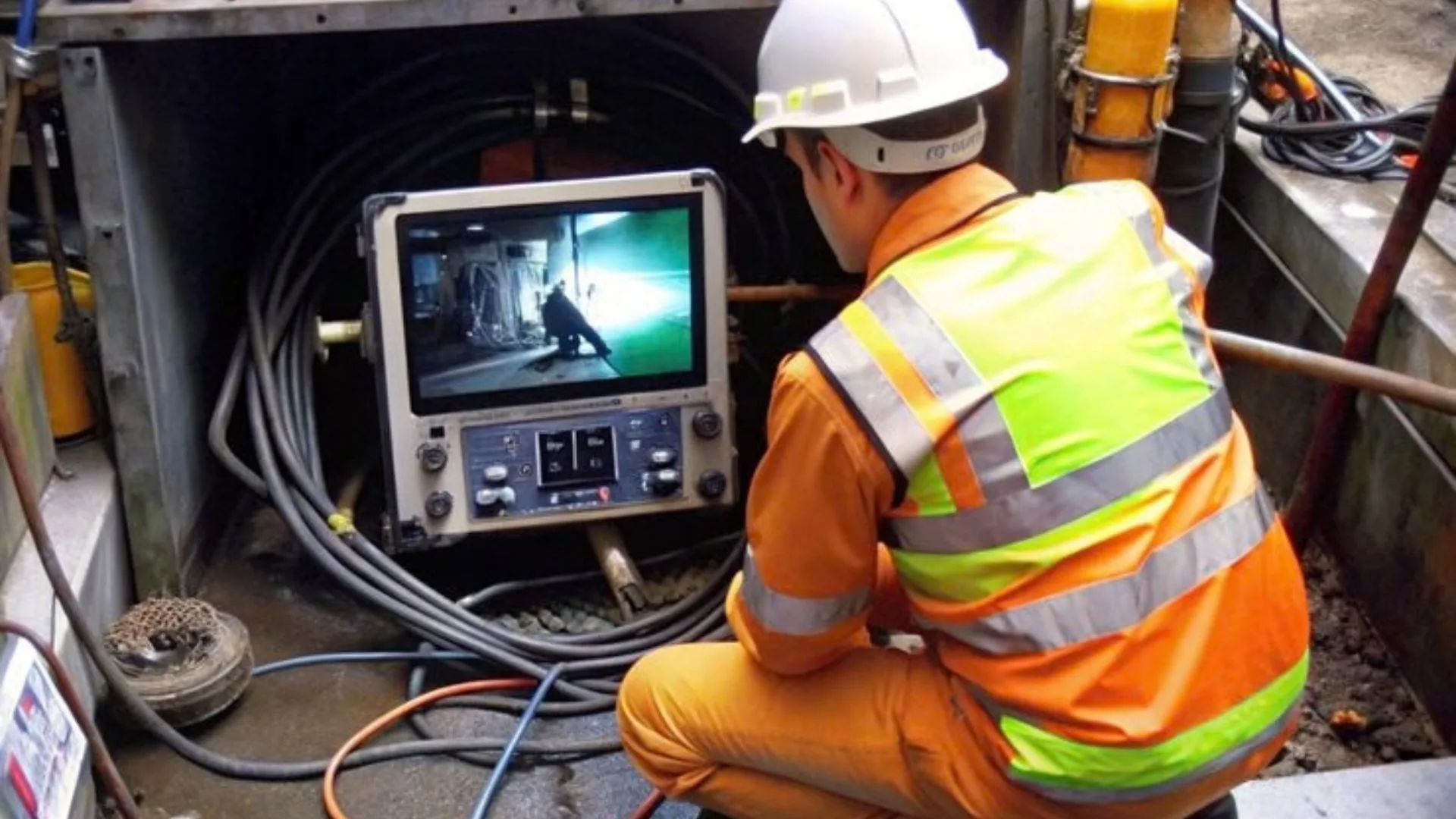
The plumber feeds a flexible cable with a camera head into the line through a cleanout or a pulled toilet. A screen at the top shows the inside of the pipe, and the footage is recorded. Most residential laterals are 4 inches wide, with 6 inch lines common on larger properties.
Many cameras also carry a transmitter. The plumber carries a receiver along the ground, and the signal marks the pipe's position and depth. That shows where a defect sits in the yard before anyone breaks ground, and which repair method will fit.
Findings such as a belly, offset joint or missing cleanout are judged against the California Plumbing Code, which is built on the Uniform Plumbing Code (UPC), and the recording is your evidence.
What the footage commonly shows
Each finding has a different consequence. These are the ones plumbers see most.
Root intrusion
Fine roots enter at joints and cracks and then thicken, catching paper and wipes. Goleta West Sanitary District's 2018 newsletter said its camera work found defects mainly from roots.
Cracks and broken pipe
Settling, traffic loads and age break clay and cast iron. Soil then enters the line and the cracks widen.
Offset or separated joints
Two pipe ends no longer line up, leaving a lip that snags solids and lets roots in.
A belly or sag
A low spot holds water and waste. It clogs again and again no matter how often the line is cleaned.
Scale and corrosion
Cast iron pipe builds rough rust layers that narrow the bore and catch debris.
Grease, wipes and debris
Waste stuck to the pipe walls looks like a clog and sometimes hides a deeper defect.
Why a clean-out is not the same as a diagnosis
A cable machine can restore flow without ever showing why the line stopped. If a root mass is cut away, the clog is gone, but the broken joint that let the roots in is still there. The line then clogs again in weeks or months, and the cycle costs a service call each time.
A camera pass after cleaning breaks that cycle. It shows whether the pipe wall is sound, whether the slope is right and whether the line needs sewer line repair instead of another cleaning.
Want to see inside your line?
Call us to book a camera visit. We offer same-day appointments when available and a clear price before work starts.
Finding, risk and likely next step
The footage leads to a decision. This table shows how common findings map to action.
| What the camera shows | Risk if ignored | Typical next step |
|---|---|---|
| Light roots at a joint | Repeat clogs and growing roots | Jet or cut the roots, then re-inspect later |
| Offset joint or crack | Soil intrusion and a collapse over time | Spot repair of that section |
| Belly holding water | Chronic clogs and odor | Repair or replace the sagging run |
| Collapsed or crushed pipe | A full blockage and sewage backup | Excavation or trenchless replacement |
| Clear, sound pipe | None at present | Keep the recording as a baseline |
What ignoring the problem costs
A sewer backup does not pick a convenient time. Sewage rising in a tub or shower can damage flooring, drywall and contents, and the cleanup is usually more disruptive than the repair itself. Insurance often treats a gradual leak or neglected maintenance differently from a sudden event, so check the policy language.
Waiting also narrows the choices. A pipe with one cracked joint may take a spot repair, while a collapsed line may need digging through a driveway or a yard. A camera inspection, by comparison, is a one-hour visit with a clear price before work starts.
When to call for an inspection and what to do before it
You do not need a camera for every slow drain. These situations are the ones that justify it.
Good reasons to look now
- Two or more clogs in the same year
- Gurgling toilets or bubbling floor drains
- Buying or selling a home with an older sewer lateral
- Large trees near the line, or a sewage smell in the yard
Reasons to wait
- A single sink clog that cleared with a snake
- A slow drain from hair in one tub
- No symptoms and a recent inspection
- A one-time wipe or toy flush that has been removed
If the line is plugged and sewage is coming up, skip the inspection for now and call for sewer camera inspection once the flow is restored.
Lateral ownership and the district
Goleta Sanitary District's FAQ says the property owner maintains the lateral from the building to the street main. A district permit is needed for work outside the property line or in a district easement. Which district collects at your street depends on the address, so ask the district.
The same FAQ says a liner is not a District approved method of repair. That matters because lining is a common trenchless option elsewhere, and a camera inspection helps decide whether a section can be spot-repaired or needs replacing before any contractor proposes a method. If a camera shows the damage is out in the street main, the district is the one to call.
Goleta sewer notes for camera inspections
Goleta Sanitary District's boundary covers the unincorporated Goleta Valley west of the City of Santa Barbara and part of the City of Goleta around and east of the airport, with 135 miles of sewer. Goleta West Sanitary District collects for Western Goleta Valley and Isla Vista, about 6,100 connections and 62 miles of line. All of the City of Goleta's wastewater is treated at the Goleta Sanitary District plant.
For a student rental in Isla Vista, a recording is useful when the owner and a tenant disagree about the cause of a backup. In Eastern Goleta Valley, where both districts may overlap, a plumber's footage and the street address make it easier to ask the right district who owns the problem. For a Goleta West customer, ask that district about its own lateral rule, since the owner rule above comes from Goleta Sanitary District.
Questions we hear most
Most residential inspections take about an hour once the plumber can reach the line. A cleanout speeds things up. Without one, the plumber may need to pull a toilet, which adds time.
Ask before the visit. Plumbers commonly record the run and can save it for you, which is useful for insurance, a landlord or a district. The recording is also a baseline for the next inspection.
It can show what the clog is, such as roots, grease or a collapsed section. If a blockage stops the camera, the plumber usually clears it first with a cable or jetter and then runs the camera again.
Goleta Sanitary District's FAQ says the owner maintains the lateral from the building to the street main. If the camera shows the blockage in the street main, the district is responsible and should be called. The footage settles which side of the property line the problem is on.
Often, yes, especially for an older house. A recording before closing shows roots, sags or cracks that a seller may not know about. It gives you a basis to negotiate or plan a repair.
Permit rules vary, so ask City of Goleta Building and Safety inside city limits, or County Building and Safety in unincorporated areas. The district also requires a permit for work outside the property line or in its easement.