
The meter test, start to finish
Do this when nobody is home or the house is quiet, so no one flushes or runs a tap halfway through.
- Turn off everything that uses water. Shut off taps, showers, the dishwasher, washing machine and the ice maker. Stop any irrigation timers and make sure nothing is filling a pool or a fountain.
- Locate the meter. It usually sits in a ground-level box near the curb or the property line, with a metal or plastic lid. Lift the lid with a screwdriver and look inside for spiders before reaching in.
- Read the dial and the leak indicator. Note the full number on the register. Then look at the small triangle, star or low-flow wheel. It spins whenever any water flows, even a tiny trickle.
- Wait without using water. EPA WaterSense suggests a two-hour gap with no water use for the most reliable result. Half an hour will show a large leak, while a slow one needs the longer wait.
- Read it again. If the numbers advanced or the indicator kept moving, water is leaking somewhere on the property side of the meter.
Reading the dial and knowing the units
Meters count water in either gallons or cubic feet, and the unit is printed on the face. One cubic foot is about 7.5 gallons, so a small change in cubic feet is more water than it looks. Write down every digit, including the sweep hand or small test dial if there is one.
Most residential meters have a low-flow indicator that is far more sensitive than the main numbers. If it spins with every fixture off, you do not need to wait for the register to change. Take a photo of the dial before and after so you have a record for the plumber or your water provider.
Fixes for a found leak are made to the California Plumbing Code, which is built on the Uniform Plumbing Code (UPC), and the utility side of the meter is not yours to work on.
If the meter moved, narrow down where
Once the test says there is a leak, a few checks sort the usual suspects before anyone digs or opens a wall.
Toilets
Silent flapper leaks are the most common source. See the dye test below.
Outdoor spigots and irrigation
Look for wet soil, a soggy lawn, or a valve box full of water. A broken sprinkler head can run unseen.
The main line to the house
Warm or damp spots on a slab, or a patch of lawn that stays green, can mean a pressurized line is leaking underground.
Water heater and fixtures
Check the base of the heater, under sinks and behind the washing machine for drips or damp cabinet floors.
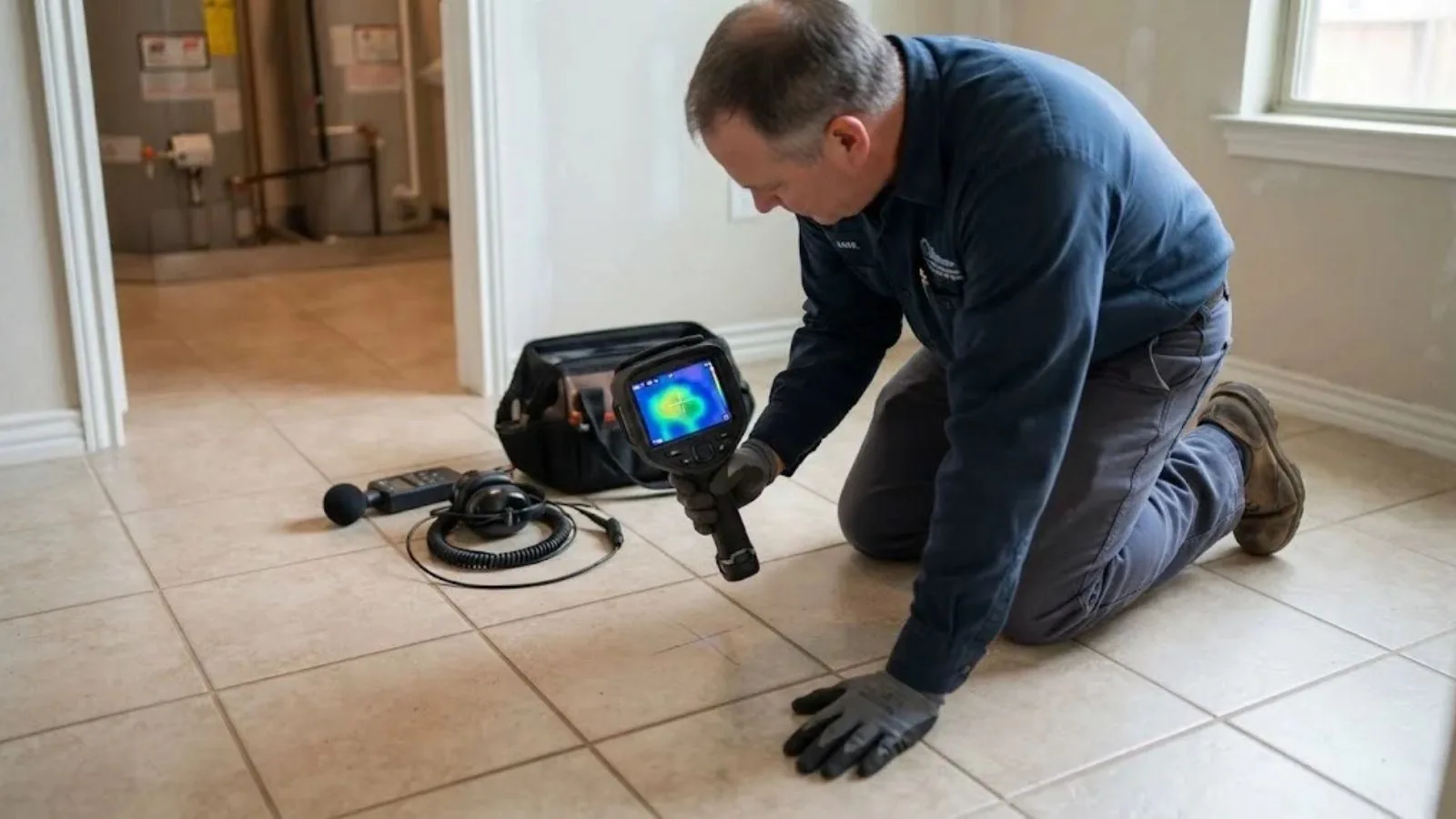
For a leak you cannot find, leak detection uses acoustic and thermal tools to find the source without tearing up finished surfaces.
Test says there is a leak
Call the 24/7 line with your meter findings and the dispatcher will tell you what to do while you wait for a same-day appointment when available.
The toilet dye test
Toilets leak into the bowl without making a sound, and they waste more water than most people expect. This takes about ten minutes.
- Take the lid off the tank. Do not flush during the test.
- Add food coloring. A few drops of dark food coloring in the tank water is enough.
- Wait about ten minutes. EPA WaterSense uses this window for the test.
- Check the bowl. If color shows up in the bowl without a flush, the flapper or its seat is leaking. Flush right away to avoid staining the tank.
A worn flapper is a cheap fix, and EPA WaterSense says flappers should be replaced at least every five years.
What the meter reading is telling you
Different results point in different directions. This table helps you decide what to do next.
| What you see | What it likely means | Next step |
|---|---|---|
| Indicator still, numbers unchanged | No leak on the property side right now | Check the bill history for other causes |
| Indicator turns slowly | A small leak, such as a toilet or a drip | Run the dye test, check taps and spigots |
| Indicator spins fast | A large leak or a running fixture | Shut off the main valve and call a plumber |
| Test passes but the bill is high | Use, not a leak, or an intermittent leak | Compare usage with household changes |
What a rising water bill means
A bill that jumps with no change in habits is a signal to test the meter. EPA WaterSense says the average household wastes more than 9,300 gallons a year to leaks, and that a drip every second adds up to over 3,000 gallons a year. A hidden leak under a slab wastes far more, and a toilet that runs wastes water without any sound.
If the test shows a leak and the plumbing is in the slab, a slab leak repair may be the answer. Do not wait. Goleta Water District's rule is that leaks must be fixed in 24 hours, and it stayed in effect after the 2019 shortage ended.
Fix it yourself or call a plumber
Many leaks are a simple part swap. Some are not, and the difference is the location.
Fine to fix yourself
- A worn toilet flapper or fill valve
- A dripping hose bib washer
- A loose compression nut under a sink
- A broken sprinkler head
Call a plumber
- A meter that spins with every fixture checked
- Damp floor, warm slab or hissing in a wall
- A visible leak at the main line or the water heater
- Any leak you cannot find after an hour of looking
When water is already pouring, turn off the main valve at the house first, then call.
Goleta Water District notes for your meter test
Goleta Water District serves the Goleta Valley, and it has a Leak Adjustment Request form. Whether an adjustment applies to your bill, and who owns the pipe between the meter and the house, are questions to ask GWD directly before you assume anything.
Not every home in our service area is on that district. Montecito has its own water district, and Hope Ranch is served by La Cumbre Mutual Water Company. If you live in Montecito or Hope Ranch, check your bill for the provider name and call that office with your meter question.
Questions we hear most
Half an hour will reveal a moderate leak. EPA WaterSense suggests a two-hour gap with no water use for the best result. A slow leak may need the full two hours or an overnight test.
It is the low-flow or leak indicator. It turns whenever water is passing through the meter, even a slow trickle. If it spins with everything off, water is moving somewhere.
Not necessarily. Toilets, irrigation lines, hose bibs and water heater fittings leak more often than slab pipes. Rule those out first, then call for leak detection if the meter keeps running.
Ask Goleta Water District. The district has a Leak Adjustment Request form, but we cannot say what the policy covers. Keep your plumber's repair record and your meter photos to show what you found.
Yes, an intermittent leak can slip past a short test, for example one that only runs when the irrigation timer or a sticking fill valve cycles. Repeat the test at a different time of day or leave it overnight.
No. New plantings, houseguests or a filling pool can raise use. If the meter test is clean and the bill is still high, compare the dates with changes in your household.